The Access All Areas project hits major milestone
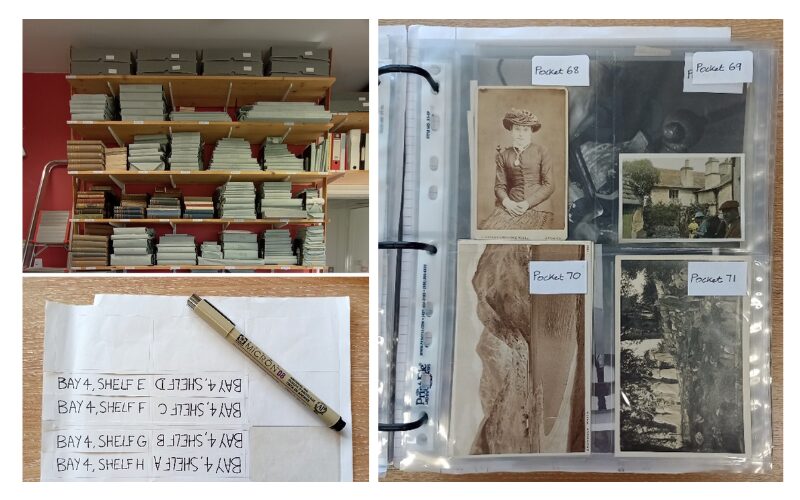
Since February 2024, our volunteers have been conducting a review of Keswick Museum’s collection records dating back as far as the 1890s when the museum first opened. We are delighted to announce that this work is now complete!
One of the key objectives of the Access All Areas project was to go through every source of information relating to the museum’s collection and fully account for every object in our care. These sources included minute books, correspondence, catalogues, and many other kinds of paperwork. It was far from a simple task, as our collection is made up of around 20,000 items! From photographs, books, architectural drawings and pieces of art to geological samples, scientific instruments and taxidermy, we matched record to object, one by one.
Beyond ensuring the accuracy of our records, our volunteers located misplaced objects and even identified items whose provenance (and sometimes function!) had been lost to time. We now know more about the objects in our collection than ever before, which means we can share more of them with our visitors.
Best of all, the project has shed light on the many fascinating objects held by Keswick Museum which have not previously been, or are not currently, on display or the subject of research.
We can’t wait to share everything we discovered with you!
Learn more about Access All Areas
We asked Assistant Curator Joseph, who’s leading the project, to tell us more about it.
Access All Areas is an 18-month project, funded by the Arts Council, to increase access to Keswick Museum’s collections. We are working with partners to reinterpret collections, recruit volunteers who face barriers, deepen community links and improve our resources for diverse access needs.
One of Access All Areas’ key aims was to go through all the records relating to our collection with the help of trained volunteers.
When we did an inventory of our collection in 2023-4, we realised that our object catalogue records could be improved, as they weren’t always very detailed or reliable. We also found more objects than we were expecting. What were these extra objects and how had they ended up in the museum?
The Access All Areas project has two goals with regards to the collection: to find out more about where our objects came from; and to make sure our object catalogue records are as detailed and accurate as possible.
We had a huge amount of documentation to go through, checking for useful information about the objects in our collection.
Keswick Museum first opened in 1898 and we have records dating back to then. However, record keeping at the museum hasn’t always been consistent. From the 1890s to the 1960s, information was recorded in minute books. From the 1960s to the 1980s, we have letters sent to and from the curator at the time. In the 1990s, a new curator introduced the modern forms of museum documentation that we still use today, including accession registers (listing which objects are formally part of the museum’s collection) and entry forms (recording objects that have been brought into the museum’s care). We also have other sources of information, such as old catalogues and newspaper articles.
This was such a big project, our team of volunteers were working on it from February 2024 to June 2025! A major part of the project was transcribing handwritten records onto spreadsheets and matching these entries to objects we still have today. Another big task was checking for issues in our object catalogue records, such as incorrect spellings and dates, or incorrect provenance information. I’m very grateful to the volunteers for their focus and attention to detail when going through all the paperwork.
The volunteers have recently finished checking all the documentation relating to our collection, which is an incredible achievement!
As a result, we now know more about our collection than ever before, which means we can share more of the objects with our visitors. Our handwritten records have now been digitised, making them more easily accessible and searchable. We have discovered the provenance of hundreds of objects for the first time, found over 250 missing objects, and worked out where 50 of those unexpected objects came from. We are using the information the volunteers have found to update our digital catalogue records so that they are more accurate.
There’s always more work to be done, and we have a fantastic team of volunteers doing it!
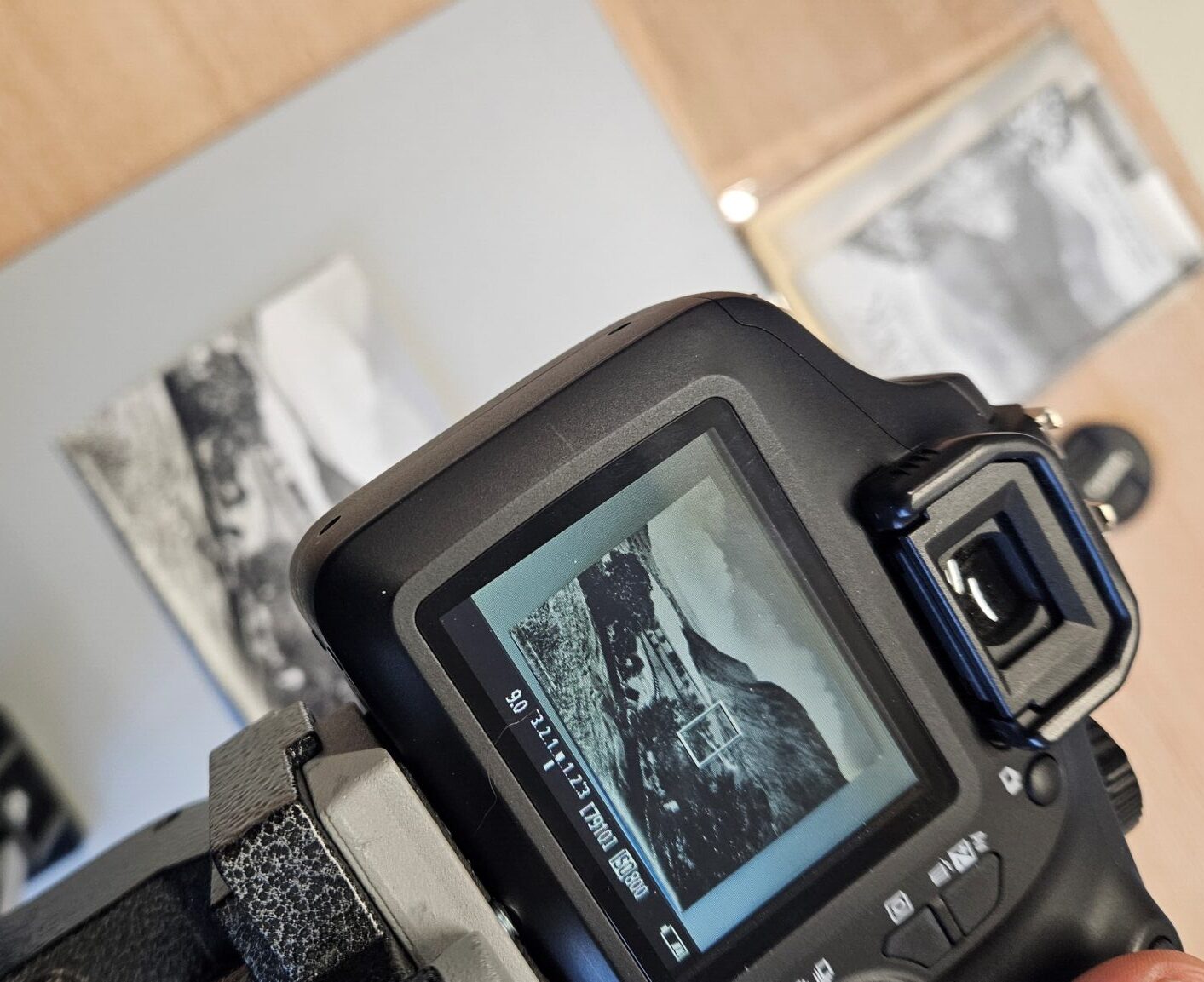
Some of our volunteers are creating catalogue records for objects that had previously only been recorded in bulk, such as a large group of designs from the Keswick School of Industrial Arts. Other volunteers are photographing objects so we can attach images to their catalogue records.
We are still matching spreadsheet entries to objects and updating the information in our catalogue records. We also need to decide what to do with the objects that aren’t formally part of the collection.

Our volunteers do an incredible amount of research for the museum’s exhibitions, so we wanted to give them the opportunity to write in a more personal way about their favourite objects and what they mean to them.
Four of our volunteers have written new labels for objects on display, forming a “Volunteer Voices” trail around the galleries. It’s great to see how these labels celebrate what is unique about the Keswick area and its history, while also linking us to the wider world.
The “Volunteer Voices” trail will be added to the galleries very soon.
Get involved
If you are interested in volunteering with Keswick Museum, you can explore our current opportunities here.
To express your interest, please download our Application Form – then email it to us at operations@keswickmuseum.org.uk or telephone us on 017687 73263.


