This post was written by Micky, one of our wonderful volunteers who has now moved to Scotland for a new job in the heritage sector. We wish her the best of luck and thank her for all her hard work!
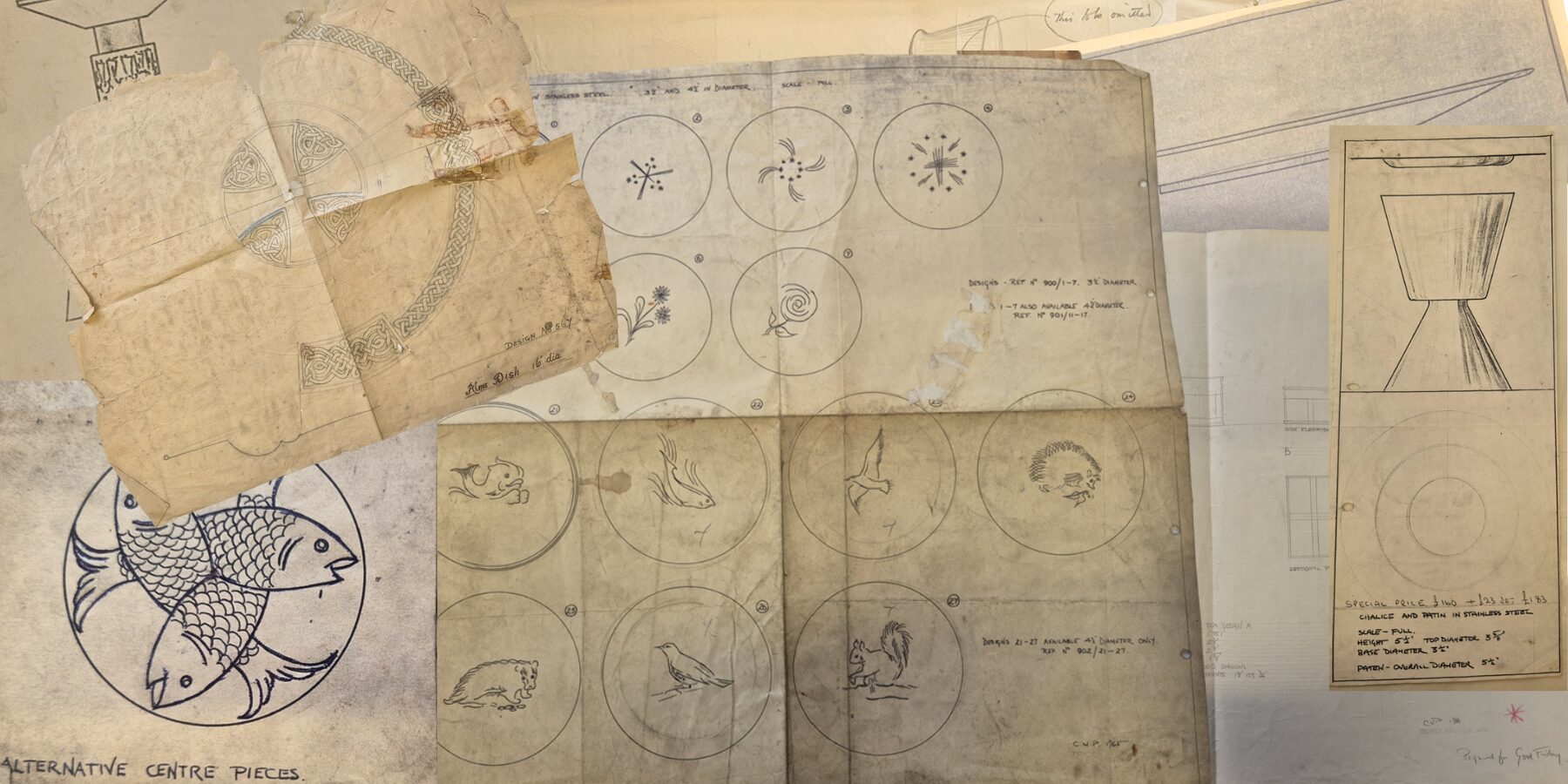
Back in April 2025, the Assistant Curator assigned myself and Sheena, another volunteer, the task of cataloguing 2 large boxes of designs from the Keswick School of Industrial Arts (KSIA). They had been donated to the museum by Renee Pepper—Renee’s late husband, Colin Pepper, had worked at the school for 30 years before its closure in 1984 and passed away in 2008.
Cataloguing the designs was a significant task, as KSIA holds a central place in the cultural heritage of Keswick and in the story told by Keswick Museum. We each spent half a day per week on the project, so it took us 6 months to catalogue all 323 objects!
Now that we know exactly what each design shows, it will be much easier to share them with interested researchers and include them in any future exhibitions.
The designs
The designs were mostly made by Colin Pepper and date from his time at the school from the 1950s to the 1980s. A large portion of the designs are for church items such as patens, crosses, candlesticks, chalices, and other paraphernalia. There are a few trophies and sometimes a close-up sketch of decorative embellishments that could potentially go on some of the designs. There are also a few papers with typed and handwritten information about item numbers, time spent, and quantities of specific designs, as well as photos of trophy shields.
The cataloguing process
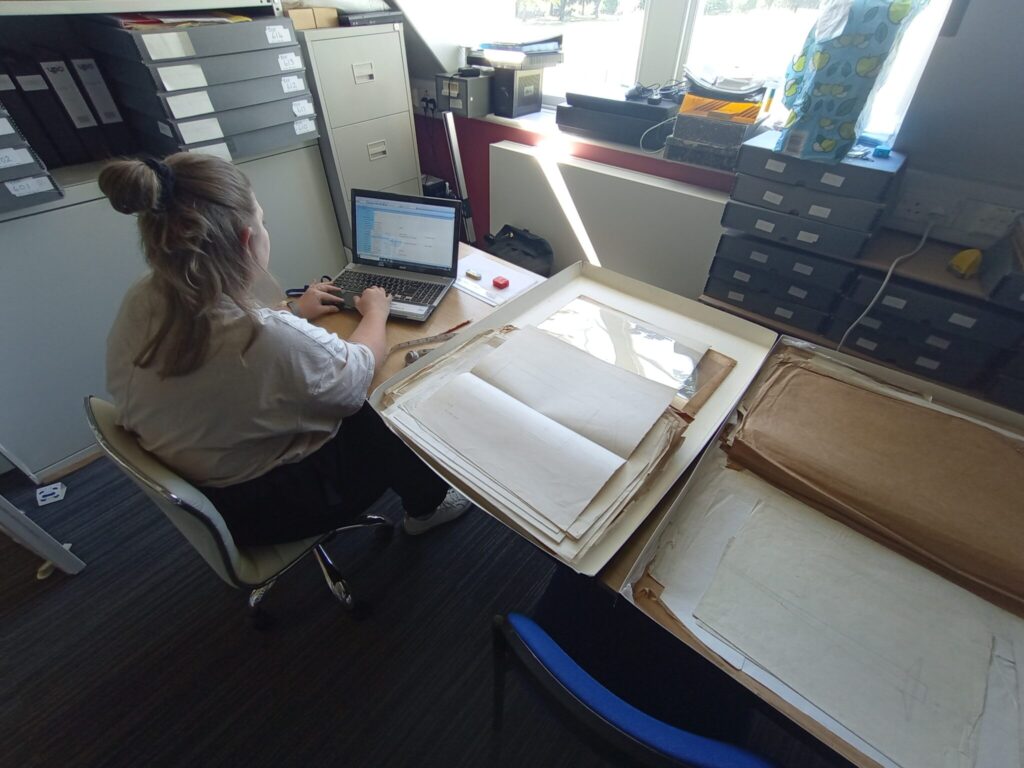
Each week, we would start by pulling out one of the large, thin boxes we were working on, opening it, and finding the next design that needed to be catalogued. We would assign an object number to each individual design, fill out a record for it on the museum’s digital catalogue, then move onto the next design. All the time, we had to take care to handle and unfold the designs carefully, keep the designs in the same order, and try to use consistent language.
The digital catalogue requires a series of fields to be filled in, which are:
- A one word summary of what the object is (e.g. ‘design’)
- A title (if the design has one)
- A detailed description of the object (for example: ‘Pencil drawing on translucent tracing paper, Greek Cross in circle with Celtic knots’)
- When the design dates from and the name of the artist (if known)
- Objective information about the design’s measurements, the material used, and any inscriptions on the page
- An assessment of the condition of the paper, which is either good, fair or poor. Thankfully, nearly all of them are in good condition!
Standouts
Here are some examples of the designs to give a sense of what this collection contains:
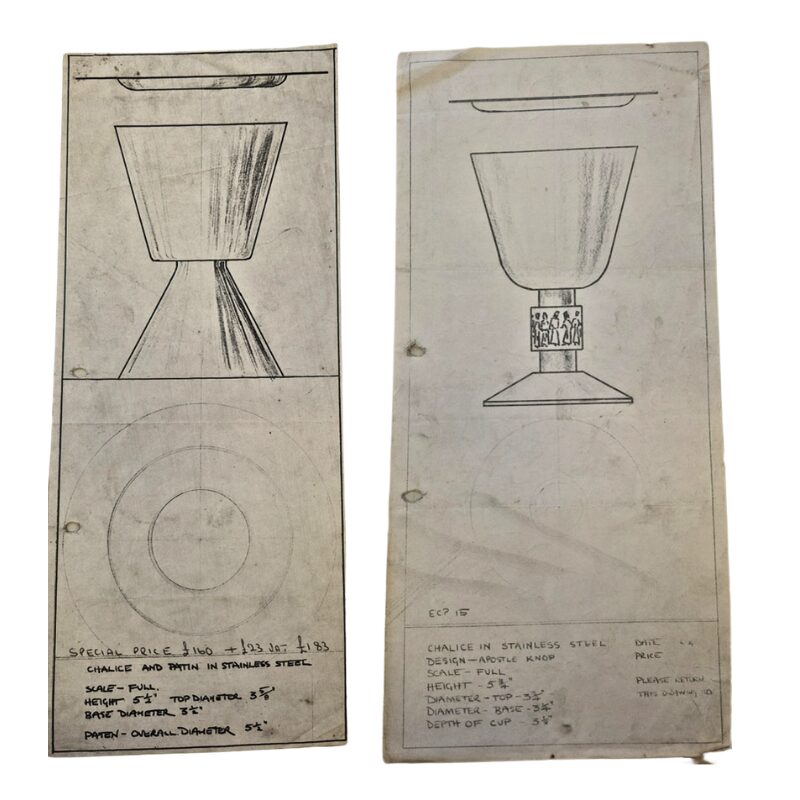
I chose these as they are similar but with quite different details. One chalice has embellishment around its stem which, when going through all of the designs, wasn’t overly common. The other is simpler but also includes various pricing.
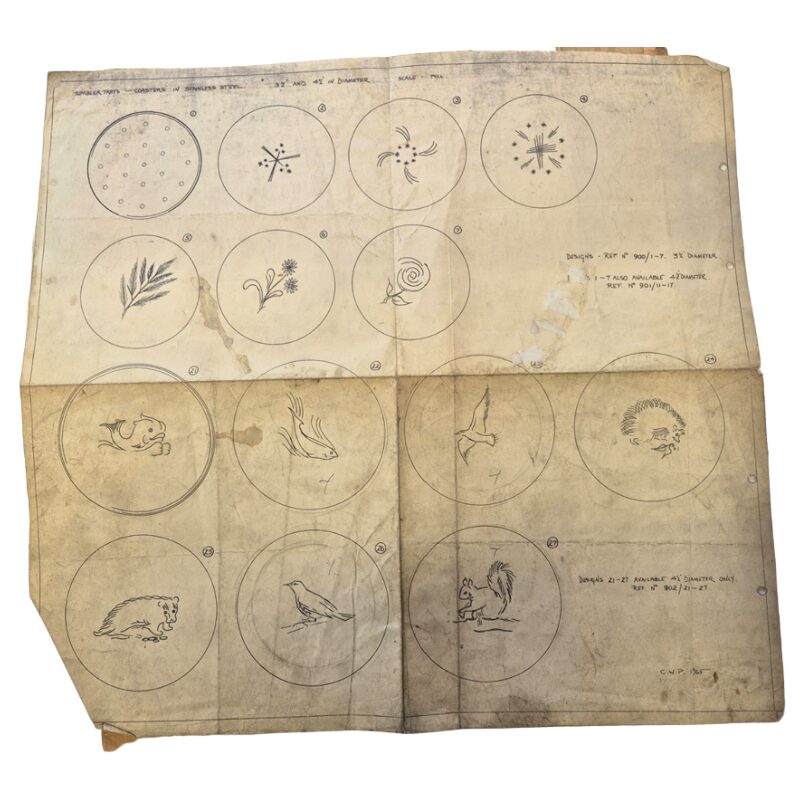
This page full of designs for coasters that could potentially be embellishments to other designs is quite special in this collection and the designs are beautifully drawn
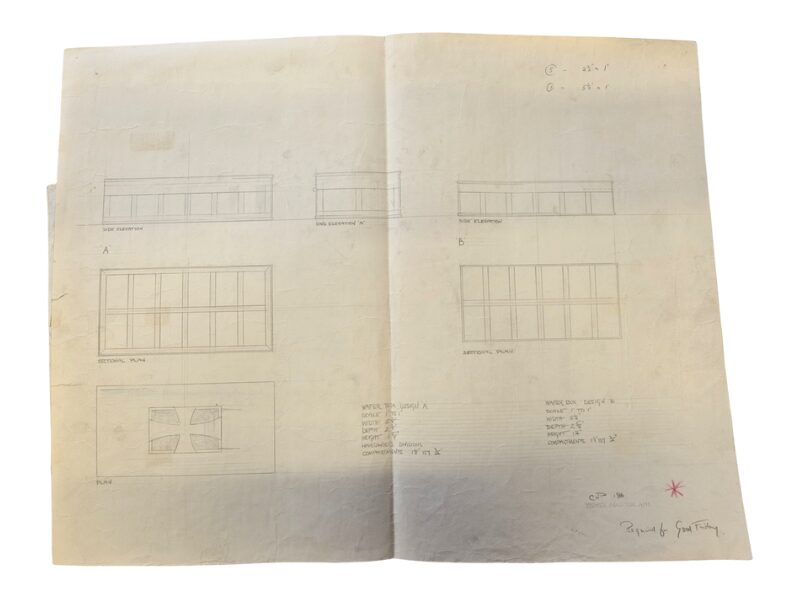
Most of the designs were side-on and top-down. This wafer box design was drawn from multiple sides which made it quite different.
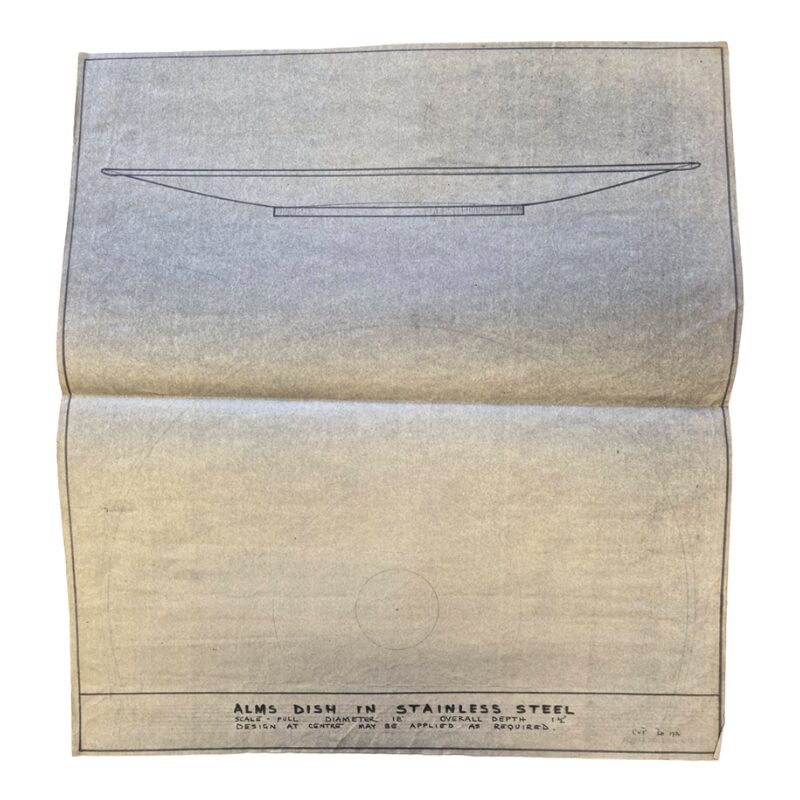
Some designs were completely hand-drawn in pencil and others, such as this one, had extremely clear lines in ink or marker, improving the quality and the ease with which we could describe a design.
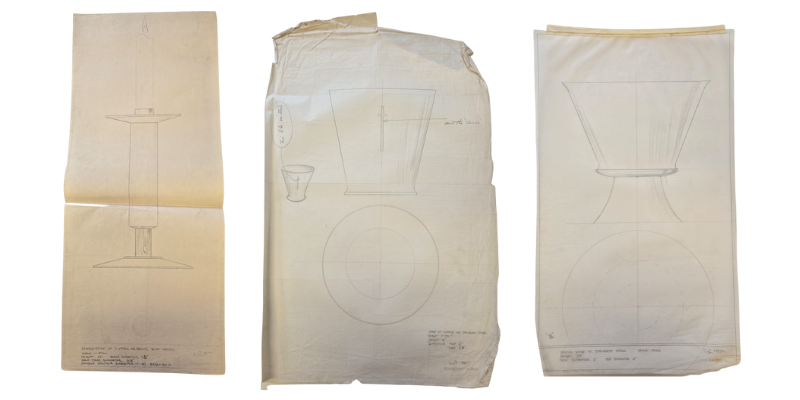
These designs are more typical of the majority of designs in the boxes. Whilst the drawings are still clear, they are in pencil, the papers are torn or crinkled, and some of the notes are harder to read. Each of these designs are also signed with Colin Pepper’s initials, “CWP”, with a date.
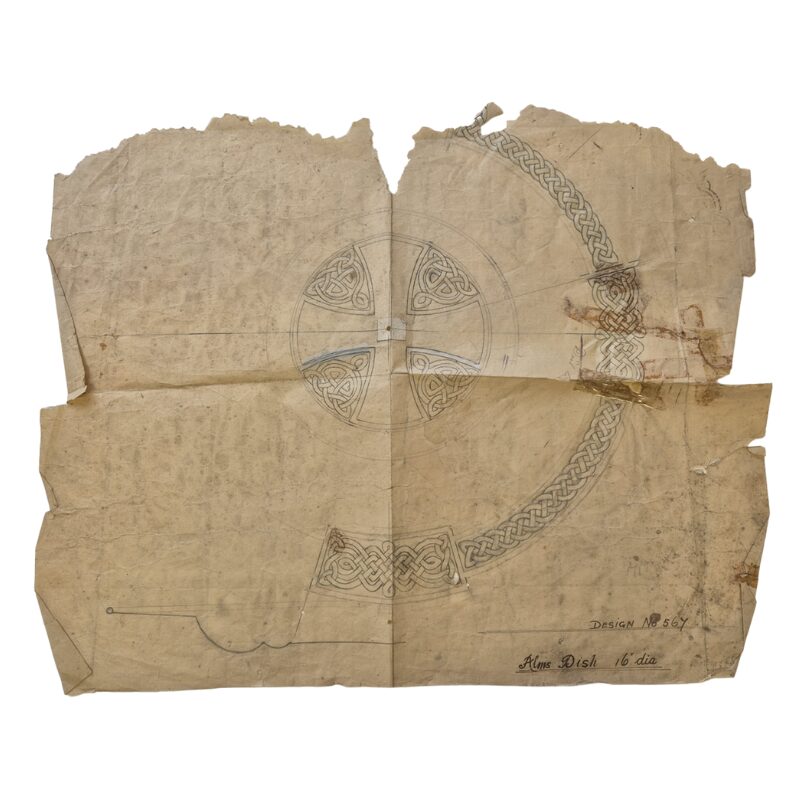
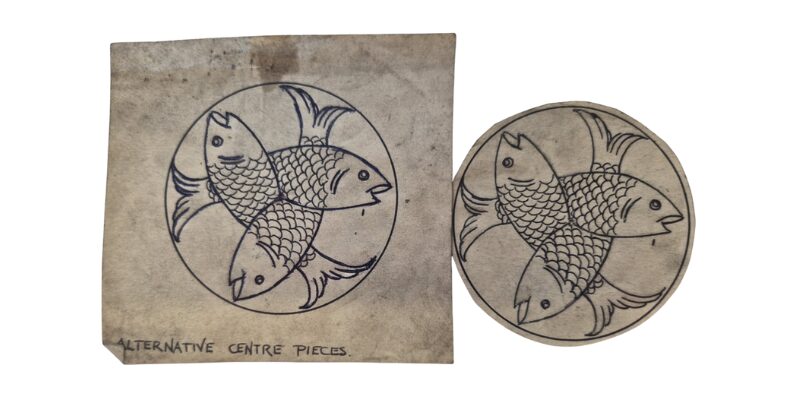
Both of these designs were quite unusual for their detail and intricacy. I’ve included them because I find them pretty. The alms dish paper (above) is in poor condition but the drawing is still incredibly detailed and the ichthus centrepiece (below) shows an example of how we can label the objects.
About Access All Areas
Access All Areas is an 18-month project, funded by the Arts Council, to increase access to Keswick Museum’s collections. We are working with partners to reinterpret collections, recruit volunteers who face barriers, deepen community links and improve our resources for diverse access needs.
To learn more about our recently-completed review of Keswick Museum’s collection, click here.


