
“Do you really have Napoleon’s Teacup?”
“Well, it’s a rather long story…”
Keswick Museum was founded in 1873, so there has been plenty of time for myths to develop about our collection. Although it might seem a shame to ‘bust’ these popular and entertaining myths, the truth about the objects in our care can be just as interesting! Thanks to our ‘Access All Areas’ project, we know more than ever before about the significance of our collection and where it came from.
Here are some cases where myth and reality do not quite match up…
MYTH
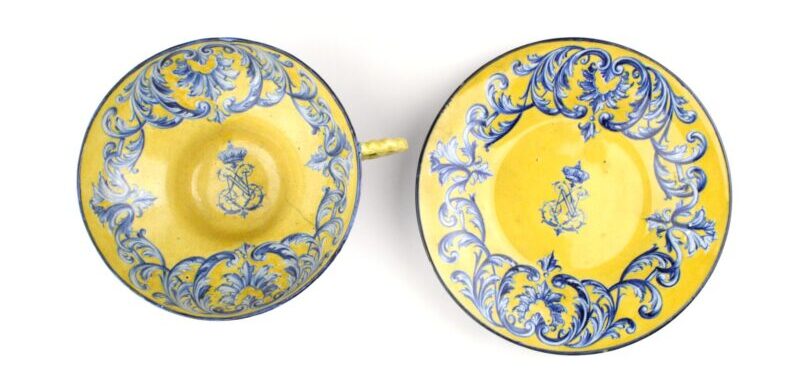
The museum’s collection includes Napoléon’s personal teacup.
REALITY
In 1951, a Mr Baxter of Borrowdale donated a “cup and saucer stated to be a relic of Napoleon Bonaparte” to the museum. The claim that it had belonged to Napoléon is based on the crowned ‘N’ monogram that decorates the cup and saucer. The cup and saucer were made in Marcy, Nièvre; the Nièvre region, particularly the city of Nevers, was famous for manufacturing faience (tin-glazed earthenware pottery), which was more affordable than porcelain. As lovely as the cup and saucer are, with blue and white painted decoration on a yellow background, Napoléon commissioned much higher quality porcelain services from the Sèvres factory for his own use. It is more likely that this cup and saucer was owned by one of Napoléon’s French subjects.
Perhaps it was made to celebrate an important occasion, such as Napoléon’s coronation in 1804, just like we can buy royal commemorative mugs today. How did it end up in Borrowdale? We don’t know!
✽
MYTH
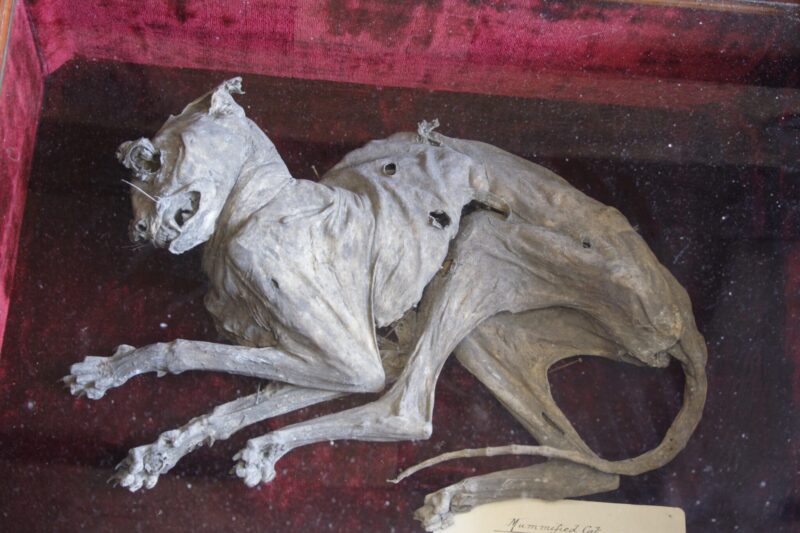
The museum has a 500-year-old mummified cat that was hammered into the roof of a church to scare away evil spirits.
REALITY
Although we do have a ‘mummified’ (dried) cat that has been spooking unsuspecting visitors for decades, its origins are mysterious. According to our records, it was found in 1849 between the slates and plaster of the roof of St Cuthbert’s Church, Clifton (near Penrith), when the chancel was taken down and rebuilt. Three nail holes are clearly visible in the cat, suggesting it was nailed to a roofbeam. It was guessed to be about 500 years old at the time it was found, which might be true as the chancel is thought to have previously been rebuilt in the 13th century.
However, more time has passed since the cat was found, so now it must be closer to 700 years old! A former curator got confused and claimed that it came from St Luke’s Church, Clifton (near Workington), so it was incorrectly labelled for a while. It has been suggested that the cat was a charm against evil spirits or a talisman to scare away mice and rats. While we may not have a definite answer, many similar dried cats have been found in old buildings across Europe.
✽
MYTH
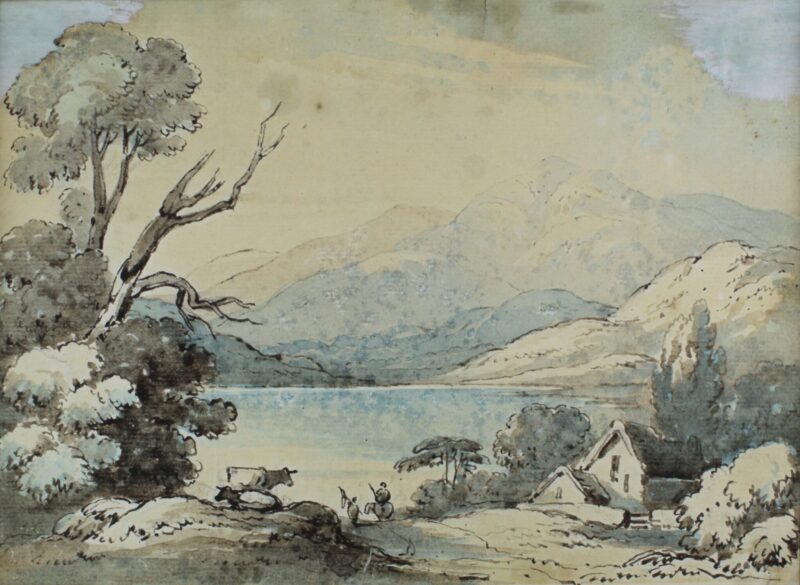
The museum has a watercolour painting of Skiddaw and Derwentwater by J.M.W. Turner, the celebrated English Romantic artist, possibly made on a visit in 1797.
REALITY
This painting was bequeathed to us by Canon H.D. Rawnsley, the vicar of Crosthwaite Church and co-founder of the National Trust. Although Rawnsley died in 1920, the terms of his bequest meant that the painting did not come into our care until his widow, Eleanor, died in 1959. Canon Rawnsley believed—having probably been told this by the person he bought it from—that it was painted by Turner and had come from the collection of Turner’s early patron, Dr Thomas Munro, so this was accepted as fact for a long time.
Unfortunately, this does not appear to be the case as the watercolour does not match Turner’s usual style. It has been suggested that the artist was actually James “Drunken” Robertson, a contemporary of Turner. A very similar work by Robertson can be found in the collection of the Art Institute of Chicago (https://www.artic.edu/artworks/85889/mountainous-landscape-with-river). Regardless of the artist, it is a beautiful pastoral scene.
✽
MYTH
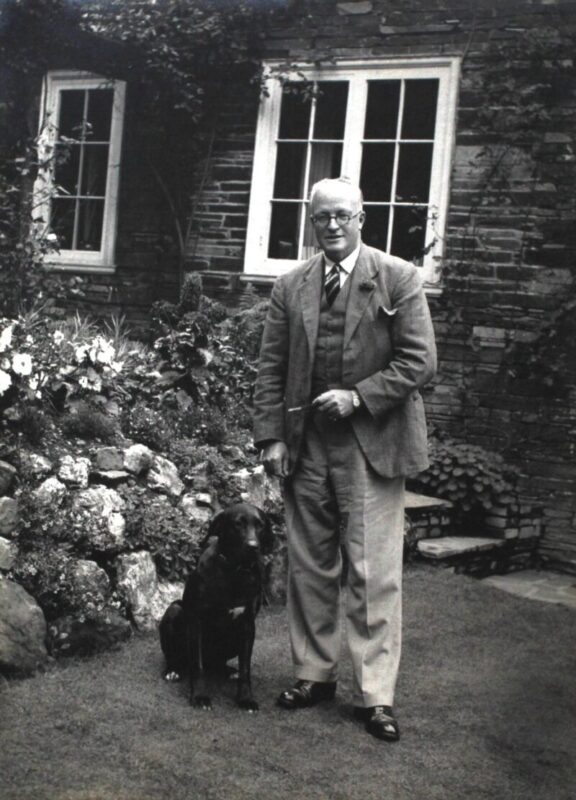
Keswick Museum has 15 volumes of diaries written by Sir Hugh Walpole, author of the ‘Herries Chronicles’ novels set in and around Borrowdale.
REALITY
Hugh Walpole’s diaries are not in our collection and they never have been—they can be found in the Harry Ransom Centre, University of Texas at Austin, USA.
This misconception appears to have come from the VisitCumbria website (https://www.visitcumbria.com/hugh-walpole/) and it has been repeated elsewhere online, leading to a number of researchers contacting us only to find out that the diaries are actually thousands of miles away! However, we do have a significant Walpole collection, including the original manuscript drafts of his ‘Herries Chronicles’ novels (bequeathed to our care in Walpole’s will), letters to and from Walpole, and portraits of Walpole.
✽
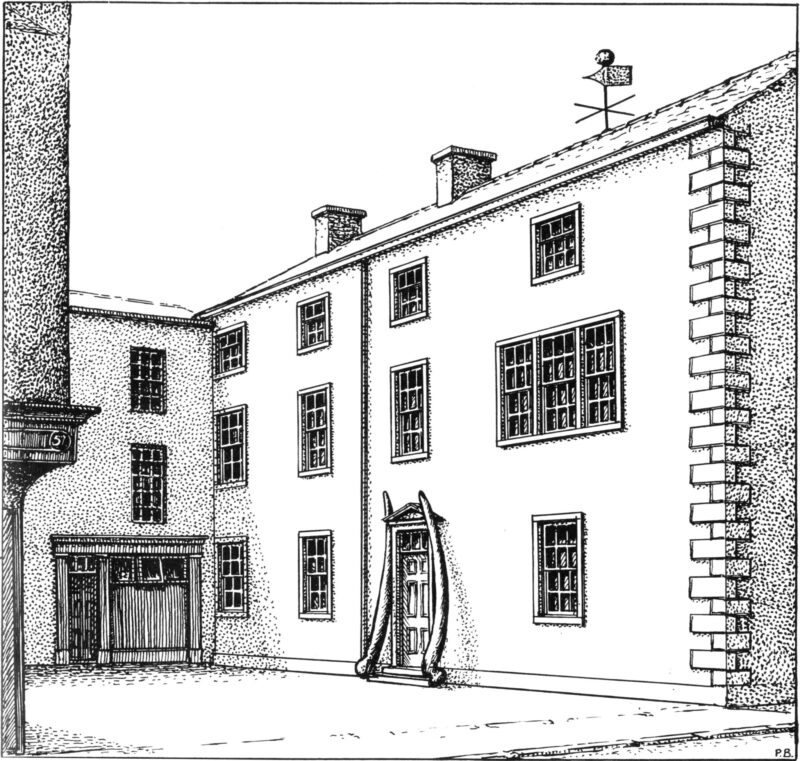
MYTH
The current Keswick Museum has inherited the collection of Peter Crosthwaite’s Museum, the first museum in Keswick.
REALITY
Peter Crosthwaite opened his museum in 1781, and it continued to be operated by his descendants until 1870. Crosthwaite’s Museum was a true ‘cabinet of curiosities’ including objects from around the world as well as natural history specimens from Cumbria. The collection was sold by auction in 1870, and some of the objects are now owned by the British Museum (which you can see here: https://www.britishmuseum.org/collection/term/BIOG67925).
Our collection was started from scratch in 1873 and only a very small number of objects had previously been in Crosthwaite’s Museum, including: Peter Crosthwaite’s set of Musical Stones; the lock and key for the Earl of Derwentwater’s home on Lord’s Island; and two left feet of sea eagles. We also have Peter Crosthwaite’s octant (an instrument used for navigation), copies of Peter Crosthwaite’s maps of the lakes, a handwritten catalogue of Crosthwaite’s Museum from 1826 and several manuscripts written by Peter Crosthwaite.
✽
About Access All Areas
Access All Areas is an 18-month project, funded by the Arts Council, to increase access to Keswick Museum’s collections. We are working with partners to reinterpret collections, recruit volunteers who face barriers, deepen community links and improve our resources for diverse access needs.
To learn more about our recently-completed review of Keswick Museum’s collection, click here.


